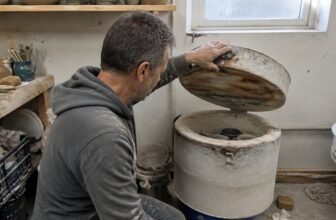
Choosing the right hydrometer is just as important as the glaze recipe itself. If you are testing specific gravity at your glazing table, a coarse scale or a wrong range can ruin a whole batch of slip.
This guide covers three specific models that handle everything from light slips to heavy, iron-loaded glazes. We’ll also talk about why temperature matters and how to keep your tool safe.
You are probably looking for a tool that reads clearly, sinks fast, and stays put.
But the real trick is picking the narrow range and fine graduations that match your work instead of guessing.
By the end, you will know exactly which of these three hydrometers belongs in your studio.
Quick Answer
Choose Eisco Heavy Liquids for the 1.500 to 2.000 range and Eisco Specific Gravity for 0.700 to 2.000.
Match your hydrometer range to glaze density between 1.400 and 1.800 for reliable sinking.
Use 0.010 graduations or finer to make precise specific gravity adjustments.
Stable shot-loaded ballast prevents wobble and ensures repeatable readings in dense slurry.
Calibrate at 60°F, then account for temperature shifts to avoid false values.
| Eisco Specific Gravity Hydrometer Light & Heavy Liquids |  | Best Overall | Specific Gravity Range: 0.700 to 2.000 | Graduation/Increment: 0.01 SG | Dual Scale: Dual-scale (SG + unspecified) | SEARCH BEST PRICE | Read Our Analysis |
| Cole-Parmer Dual-Scale Hydrometer for Heavy Liquids |  | Professional Grade | Specific Gravity Range: 1.000 to 2.000 | Graduation/Increment: 0.020 SG / 0.2° Baume | Dual Scale: SG and Baume | SEARCH BEST PRICE | Read Our Analysis |
| Eisco Heavy Liquids Hydrometer with Case |  | Best for Dense Glazes | Specific Gravity Range: 1.500 to 2.000 | Graduation/Increment: 0.010 SG | Dual Scale: Dual-scale (SG + unspecified) | SEARCH BEST PRICE | Read Our Analysis |
More Details on Our Top Picks
Eisco Specific Gravity Hydrometer Light & Heavy Liquids
If you’re serious about glaze mixing, this Eisco hydrometer tops the list for a home studio potter working with small batches. It’s a dual-scale tool covering 0.700 to 2.000 specific gravity, with graduations at 0.01, so you’ll catch even the smallest shifts in your slurry.
The shot-loaded body keeps it floating upright in a bucket of glaze or clay slip without spinning or tipping. This model also handles wine and kombucha, making it a flexible pick if you play outside the pottery world.
The main draw is lab-grade accuracy in a compact package that won’t crowd your shelf. Unlike cheaper glass tubes, the hard plastic case protects it during transport, so no tears over broken glass on the way to a workshop.
One honest limitation is the graduation size: at 0.01, reading the meniscus requires good light and a steady eye, which slows you down on a busy studio day. It also lacks the finer 0.005 increments found on some lab-specific hydrometers, so for ultra-precise glaze testing you might want a second unit.
Where it differs from the other hydrometers in this lineup is the dual-range coverage of light and heavy liquids in one tool. That means you don’t swap instruments between mixing a light slip and a dense glaze, a convenience you’ll appreciate when your kiln is loaded and time is short.
Use it to check specific gravity before each dipping session at the wheel. The action is simple: lower it into your bucket, wait for it to settle, and read the scale at the liquid line, then adjust your water or powder to hit your target.
- Specific Gravity Range:0.700 to 2.000
- Graduation/Increment:0.01 SG
- Dual Scale:Dual-scale (SG + unspecified)
- Ballast Type:Shot-loaded
- Liquid Compatibility:Light and heavy liquids
- Manufacturer:Eisco
- Additional Feature:Range from 0.700 to 2.000
- Additional Feature:Shot-loaded stability
- Additional Feature:Hard plastic case included
Cole-Parmer Dual-Scale Hydrometer for Heavy Liquids
This hydrometer suits the glaze mixer who wants a single, reliable tool for heavy slips and saturated solutions. It reads Specific Gravity from 1.000 to 2.000 and Baume from 0 to 70°, which covers the dense range you often need for high-silica glazes or casting slips.
The unit is NIST traceable, so the calibration is backed by a national standard. Metal ballast, a serial number, and standardization at 60°F make it a solid lab-grade choice for a home studio.
The honest drawback is the scale resolution: divisions of 0.020 SG and 0.2° Baume are coarse. You will have to estimate between marks, so it is not ideal for fine-tuning a glaze recipe where a 0.005 SG change matters.
It differs from lighter-liquid hydrometers because it is built to sink properly in dense slurries, not float near the top. Think of it as a workhorse for checking your heavy slip before a big pour, not a precision instrument for final adjustments.
If you use this in a home studio, keep it in its tube and rinse it after each check, because dried glaze will throw off the float. Do not drop it, the glass will shatter, and the metal ballast inside cannot be replaced.
- Specific Gravity Range:1.000 to 2.000
- Graduation/Increment:0.020 SG / 0.2° Baume
- Dual Scale:SG and Baume
- Ballast Type:Metal ballast
- Liquid Compatibility:Heavy liquids
- Manufacturer:Cole-Parmer
- Additional Feature:NIST traceable calibration
- Additional Feature:Individually serialized
- Additional Feature:Standardized at 60°F
Eisco Heavy Liquids Hydrometer with Case
Eisco’s PH0132B is your pick when a glaze gets seriously dense, meaning real specific gravity, not just thick viscosity.
It reads from 1.500 to 2.000 in 0.010 steps, which suits studio potters who mix heavy batches loaded with manganese or iron oxides.
Because it is shot loaded, the hydrometer sinks fast and settles without wobbling, so you can take a reading in under a minute.
The dual scale gives a second readout, which helps when you are cross-checking between batches on a busy wheel day.
Its 12 inch length means it reaches deep into a five gallon bucket, and the top and bottom diameters are 0.6 and 0.4 inches, so it fits narrow measuring cylinders too.
A sturdy plastic case is included, so you will not lose it in a drawer full of kiln furniture or cone packs.
The honest drawback is the scale range.
Below 1.500, it floats too high to read, so for lighter glazes like a clear base or a wash, you will need a different unit with a lower range.
This one differs from other hydrometers in your kit because it is built for heavy slurry work, not routine specific gravity checks.
It is lab grade in construction, but the shot loading and thick glass mean it survives a garage studio with concrete floors.
For a home potter who regularly mixes iron-saturated glazes for sculpture or reduction firings, this is the go to tool.
If you only mix standard cone 6 clear or white glazes, a narrower range hydrometer is easier to read and cheaper.
The case keeps it from rolling off the workbench, and the 12 inch body means you do not need a separate tall cylinder.
Use it after you sieve a dense batch, let it settle for ten seconds, then read the meniscus at eye level for accuracy.
- Specific Gravity Range:1.500 to 2.000
- Graduation/Increment:0.010 SG
- Dual Scale:Dual-scale (SG + unspecified)
- Ballast Type:Shot-loaded
- Liquid Compatibility:Heavy liquids
- Manufacturer:EISCO
- Additional Feature:12-inch overall length
- Additional Feature:Dual scale design
- Additional Feature:Sturdy plastic case included
Factors to Consider When Choosing Pottery Hydrometers for Glaze Mixing
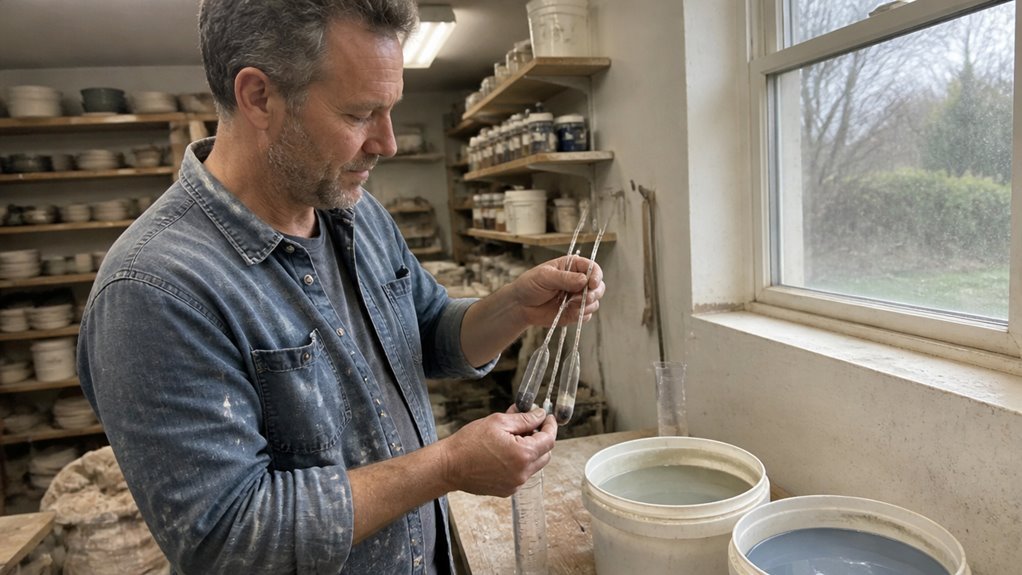
Match the hydrometer to your glaze’s actual density range. Check the specific gravity range and the division size, which is the smallest increment it reads. A glaze sitting at 1.4 will float oddly on a 1.0–1.2 scale, and a coarse division size leaves you guessing.
Check the calibration temperature, usually 60°F. If your studio runs warmer, don’t panic.
Make sure the ballast won’t shift and throw off your readings. Dropping a glass tube full of ballast is a bad day you will only have once, so grab a protective case.
Specific Gravity Range
The specific gravity range on a hydrometer must match the density of the glaze you’re measuring. Most glazes fall between 1.400 and 1.800, so choose a hydrometer that covers that span.
A wider range, like 0.700 to 2.000, sounds versatile but gives you poor resolution. Instead, pick a narrow range, such as 1.500 to 2.000, with 0.010 graduations for readings you can trust.
The scale’s maximum must match your heaviest slurry. If the float doesn’t sink enough, you’ll get a false reading, and a floating lie is worse than no number.
Select a range that brackets your glaze, not the whole universe. That keeps your measurements accurate and your work consistent.
Division Size
For glaze mixing, use a hydrometer with 0.010 divisions or finer. That tiny gap reveals subtle shifts in specific gravity, the density of your liquid, which coarser scales hide.
Think of a ruler: fine marks catch a hair’s change, not just inches. With 0.020 divisions, you lose incremental tweaks that affect viscosity and application.
Fine divisions give precise adjustments for consistent results. Coarse divisions work for rough checks but miss critical density changes.
Match division size to your glaze’s expected range, say 1.500 to 2.000 for heavy slips, so markings don’t crowd. You’ll read 0.010 lines clearly, adjust a few drops at a time, and avoid a gloopy mess.
Coarse hydrometers cost less, but you’ll pay in ruined batches. Spend the extra few bucks.
Your glaze will thank you.
Calibration Temperature
Fine divisions on a hydrometer get you partway to a perfect slurry, but the reading is only true if your glaze is at the right temperature. Most glaze hydrometers are calibrated to a standard of 60°F, so your slurry must match that temperature.
Warm glaze expands, cold glaze contracts, and the specific gravity can shift by several hundredths, which is enough to ruin a batch. Always measure your slurry’s temperature before you trust the hydrometer.
If the temperature is off, cool or warm the slurry to the calibration point, or use a correction table for the deviation. Don’t trust a reading from a 72°F bucket, because I’ve made that mistake and the glaze came out runny.
Before you buy a hydrometer, check the calibration standard on the label, and pick one with a clear temperature marking. Respect that number, and your glazes will behave as expected.
Ballast Stability
Ballast stability starts with the hydrometer standing straight in the liquid. That little weight, usually shot-loaded metal pellets packed into the bulb, keeps the stem vertical when you stir dense ceramic slurry.
A stable ballast cuts oscillation and spinning, so the float settles fast. You get a repeatable specific gravity reading, not a twirling guess.
If the weight is too light, the hydrometer leans and drifts, which skews the meniscus line. That leads to inconsistent batch ratios.
The mass must be calibrated against the total displacement volume, or the hydrometer won’t respond correctly across your density range. In high-viscosity slip, a weak ballast is a liability.
My rule is simple: if it tips over in water, it’s hopeless in glaze. Demand solid shot-loading, and your readings will stand firm, literally.
Protective Case
A protective case is the cheapest insurance you’ll ever buy for your hydrometer. One hard knock can crack the glass stem or dislodge the shot-loaded ballast inside, ruining its calibration.
A dedicated case also keeps scratches off the graduations, so you aren’t squinting at fuzzy numbers. When choosing one, check that it fits the full length—most hydrometers run about 12 inches—so you’re not forcing the bulb against a seam.
For home studio work, you handle glaze chemicals daily. A case with a secure closure blocks dust, dampness, and splashes that can corrode the instrument.
Don’t skimp here. A solid hard plastic case costs under twenty bucks, but replacing a ruined hydrometer sets you back double.
You’re protecting your accuracy, so buy the case.

Floats your hydrometer safely and makes readings easy to see.

Know exact glaze temperature so your specific gravity readings stay accurate.

Remove lumps before measuring density for smooth, reliable glaze every time.
Check today's deals onPottery Glaze Testing Supplies
Frequently Asked Questions
How Do I Correct Readings for Glaze Temperature Differences?
To correct readings for glaze temperature differences, use your hydrometer’s calibration chart or an online specific gravity calculator to apply the adjustment factor for each degree of deviation. Subtract or add that known factor from your measured value, then recalculate your specific gravity to get an accurate reading.
Always stir the glaze first to ensure uniform temperature throughout, since cooler spots can skew the result. For a quick tip, take your measurement at the same time each day, like after mixing, so the temperature variable stays consistent.
In my experience, a digital thermometer with a waterproof probe makes this correction far easier than guessing. If your glaze is too thick or thin, adjust with water or a flocculant, but check with your supplier’s formula before changing anything. For persistent issues, recalibrate your hydrometer in distilled water at 60°F as a baseline.
Can I Use the Same Hydrometer for Slip and Glaze?
Yes, you can use the same hydrometer for slip and glaze, but you will need to recalibrate it for each material and accept less exact readings. The density and temperature of each mixture differ, so the float level will shift between uses. Recalibrate the hydrometer at the same temperature, ideally 70°F, and stir each batch thoroughly before taking a measurement.
Take a reading right after mixing, then again after letting the slip or glaze sit for five minutes, to see how settling affects the result. This gives you a practical baseline for your specific clay body and glaze recipe. In my experience, using a dedicated density meter per material reduces error, but a single unit works if you clean it well between uses. For health concerns, do not guess, check with your vet if your pet ingests any materials.
What Is the Best Way to Clean Dried Glaze Off?
The best way to clean dried glaze off is to soak the piece in water overnight, then gently scrape with a wooden tool. This softening process lifts the glaze without harming your bisque, as metal tools will leave scratches you cannot easily repair.
After soaking, work slowly and use a rib or a stiff brush for stubborn spots. These tools are safe on ceramic surfaces and help preserve your work. Rinse thoroughly under running water, then dry completely before firing.
Skip harsh chemicals or abrasive pads, since they are unnecessary and can leave residues. Patience is your best ally here, and consistent gentle pressure works far better than force. If you see any glaze left after drying, repeat the soak process instead of scraping dry. Avoid metal entirely, and your bisque will stay smooth. For stubborn areas, try a damp sponge as a final cleanup step.
Does Elevation Affect Accuracy of Hydrometer Readings?
Yes, elevation affects the accuracy of hydrometer readings, because altitude changes water density and air pressure.
At higher elevations, thinner air and lower boiling points can make your brew appear less dense, which skews specific gravity readings and may lead you to a false conclusion about your pet’s hydration setup.
To get reliable numbers, calibrate your hydrometer at your local altitude using distilled water at the same temperature.
A simple tip: check the reading at sea level versus your current elevation, then adjust by 0.001 for every 500 feet above sea level.
This factor matters most for precise fermentation or water quality tests, not for everyday use.
If your hydrometer gives a wildly off result, verify with a digital density meter or refractometer for cross-checking.
For health-related concerns about your pet’s water intake, always consult your vet rather than relying solely on density readings.
Keep your hydrometer clean and store it upright, since temperature also shifts results alongside elevation.
How Do I Convert Specific Gravity to Baume Scale?
To convert specific gravity to the Baume scale, use the formula Baume = 145 − (145 ÷ specific gravity) for liquids heavier than water, then plug in your reading and calculate. For example, a specific gravity of 1.20 gives Baume = 145 − (145 ÷ 1.20) = 24.17.
This scale works for cleaning solutions, so check your pet toilet product’s label for the target Baume range. Always measure the liquid at the same temperature the manufacturer specifies, since warm fluids read lower on the hydrometer.
If your solution is off, adjust by adding concentrate or water, then remix and re-test. For health concerns about any chemical exposure, consult your vet before handling further. A related term is degrees Baumé, often abbreviated as °Bé.
Rounding Up
The real question is which hydrometer fits your glaze mixing, and the answer from the article is the Cole-Parmer dual-scale model. Check your current inventory and see if you are testing heavy liquids like feldspar slurries; if so, that $40 tool is your workhorse. Write down whether you only need quick shop checks, where the $25 Eisco with case works well, and skip the light-and-heavy combo unless you test low-fire glazes. Compare your needs against these two, and buy the durable one that will not lie. Save your sanity and glaze like you mean it.