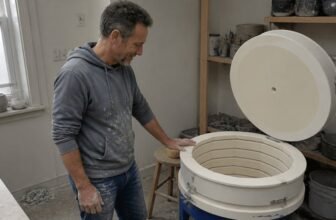
Choosing your first electric kiln can feel overwhelming, with specs and price tags blurring together as you sit at your studio table. You need a model that actually reaches the right temperature for firing your work, not one that just heats the room.
This guide covers the PYY, Paragon SC2, 2000W, Alolti, and PeiXwming options to help you compare their size, power, and controls.
We also break down the key safety features to look for, like triple-layer insulation, automatic shutdown, and a solid warranty.
By the end, you will know which kiln fits your current projects and space. Let’s start with what matters most: how each model actually fires.

Versatile 1500W kiln with PID controller for ceramics, glass, and metal.

Trusted brand, programmable digital controller for precise, repeatable firings.

Fast cooling with triple-layer insulation, spacious interior for hobbyists.
Check discounted items inElectric Kilns
Quick Answer
- Choose beginner kilns like PYY and Paragon SC2 for ease, safety, and ceramics or glass capability.
- Prioritize PID digital controllers with programmable ramps to ensure predictable, thermal shock free firings.
- Match wattage from 1500W to 2000W to home circuits, since 1500W plugs into standard outlets.
- Look for auto shutdown, over temp alarms, power outage memory, and top opening doors as key safety features.
- Select compact chambers that fit mugs, bowls, and jewelry, since piece size is limited by kiln size.
| PYY Electric Kiln for Home Pottery and Jewelry |  | Best Overall Value | Brand: PYY | Kiln Type: Electric kiln | Intended User: Home potter | SEARCH BEST PRICE | Read Our Analysis |
| PYY Electric Pottery Kiln with PID Controller | | Best for Beginners | Brand: PYY | Kiln Type: Electric kiln | Intended User: Home studio user | SEARCH BEST PRICE | Read Our Analysis |
| 2000W Electric Kiln with Digital Controller for Pottery |  | Fast Cooling Pick | Brand: Generic | Kiln Type: Electric kiln | Intended User: Hobbyist | SEARCH BEST PRICE | Read Our Analysis |
| Alolti Microwave Kiln for Pottery and Glass Fusing |  | Most Compact Option | Brand: Alolti | Kiln Type: Microwave kiln | Intended User: Beginner | SEARCH BEST PRICE | Read Our Analysis |
| 1500W Temperature-Controlled Electric Kiln for Jewelry |  | Budget-Friendly Pick | Brand: PeiXWming | Kiln Type: Electric kiln | Intended User: DIY/small studio | SEARCH BEST PRICE | Read Our Analysis |
| Paragon SC2 Programmable Digital Kiln | | Trusted Name Brand | Brand: Paragon | Kiln Type: Electric kiln | Intended User: Household use | SEARCH BEST PRICE | Read Our Analysis |
More Details on Our Top Picks
PYY Electric Kiln for Home Pottery and Jewelry
The PYY Electric Kiln is the best pick for hobbyists who juggle multiple crafts and want one machine that does a bit of everything. For the price, it wins on value, packing 1500 watts that melt metals under 2200°F in about 30 minutes.
Its main strength is the PID controller, which keeps temperatures steady and shows them on a clear LCD screen. You can fire ceramics, fuse glass, melt metal for jewelry, carve wax, or cure 3D resin without switching tools.
The honest drawback is the 1200°C ceiling, so pushing past that risks turning your kiln into modern art. Unlike a dedicated pottery kiln, this one trades raw top-end heat for versatility across crafts.
Safety features are solid: over-temp alarms shut it down, power-outage memory saves your work, and the top-opening door plus timed auto-stop keep things calm. Pair it with the included pliers and gloves, and you are set for a home studio.
For electrical hookup or ventilation questions, check the manufacturer’s instructions or ask a qualified electrician before first fire.
This kiln suits beginners who want to explore clay bodies, glaze tests, and metalwork without buying separate machines. Its difference from larger kilns is the small footprint and quick ramp, but you trade that for a lower max cone range than a dedicated high-fire model.
Keep your bisque and glaze firings below 1200°C, and it will serve you well for years.
- Brand:PYY
- Kiln Type:Electric kiln
- Intended User:Home potter
- Applications:Glass, jewelry, ceramics, metal
- Chamber Size:Spacious furnace chamber
- Temperature Control:PID digital control
- Additional Feature:UL certified safety
- Additional Feature:Power outage memory
- Additional Feature:Anti-slip crucible pliers
PYY Electric Pottery Kiln with PID Controller
At $511, the PYY Electric Pottery Kiln suits a home studio beginner who wants a straightforward first kiln for low-fire clay, bisque, and glass fusing. Its main strength is the PID controller, which keeps temperature steady and shows it on an LCD screen, so you can trust the firing curve.
The honest drawback is the 5.9-inch chamber, which limits you to small pieces like mugs, bowls, or jewelry; you will not fire a large vase or a full shelf of plates. Unlike a top-loading kiln with more vertical space, this compact unit fits on a sturdy table and moves easily at 39 pounds, but you must plan your loads around its small footprint.
You get 1500W with HRE/MoSi2 elements, reaching 2200°F, which covers cone 06 bisque and most cone 6 glazes, plus small metal melts. The over-temp alarm and auto shut-off prevent over-firing, and power-off memory resumes your schedule after a blip, saving a ruined batch.
For a beginner, this is a safer pick than a manual kiln because you set the program and walk away, but you still need to check the manufacturer’s instructions for electrical hookup, as a standard 120V outlet may not supply enough amperage. UL certification, gloves, and tongs come in the box, and a one-year warranty covers defects, which gives you peace of mind for your first studio setup.
Compared to other kilns in the same price range, the PYY stands out for its built-in PID rather than a simple dial, so you avoid the guesswork of watching cones. It differs from larger, 240V models because it runs on lower power, meaning slower ramp times, but that suits a beginner who fires small batches.
The chamber’s shallow depth means you fire single layers, not stacked shelves, which is fine for testing glazes or making tiles. If you plan to grow into bigger pottery, this will feel limiting, but for learning the basics of firing, it gives you reliable control without a steep learning curve.
- Brand:PYY
- Kiln Type:Electric kiln
- Intended User:Home studio user
- Applications:Clay, glass, jewelry
- Chamber Size:5.9 x 5.9 x 5.5 in
- Temperature Control:PID controller (LCD)
- Additional Feature:1-year warranty included
- Additional Feature:Pottery wheel accessory
- Additional Feature:Durable insulation build
2000W Electric Kiln with Digital Controller for Pottery
The 2000W Electric Kiln is the right choice for a hobbyist who wants to fire pieces quickly and move on to the next project. Its triple-layer insulation keeps the outside cool while holding heat inside, so your home studio stays comfortable and safe.
Where it beats the other kilns on this list is its fast cooling cycle. The ventilation slits speed up the cooldown after a firing, which protects the heating elements and lets you unload your pots sooner.
A clear limitation is that the digital controller offers basic temperature setting rather than complex programmable ramps, so it might frustrate you if you want to run multi-step glaze schedules. For a beginner firing bisque or single-fire stoneware, this simplicity is an advantage, not a problem.
The spacious interior fits several mugs or small bowls at once, so you are not running tiny batches all day. It handles wax burnout, enameling, and metal casting too, making it a true desktop workhorse for mixed media projects.
Compared to the slower models in this article, it trades a few advanced programming features for speed and dependability. You get a smart display for exact temp tuning, but do not expect the fine control of a higher-end digital kiln.
The build feels solid and no-nonsense, which suits the potter who values time over bells and whistles. Just check your outlet’s wiring with a qualified electrician before plugging it in, because 2000W needs a proper circuit.
- Brand:Generic
- Kiln Type:Electric kiln
- Intended User:Hobbyist
- Applications:Wax, enamel, metal, clay
- Chamber Size:Spacious interior
- Temperature Control:Smart digital display
- Additional Feature:Triple-layer insulation system
- Additional Feature:Premium ventilation slits
- Additional Feature:Desktop compact form
Alolti Microwave Kiln for Pottery and Glass Fusing
If you are short on counter space and just starting out, this kiln is the best fit for a home studio. It turns your everyday microwave into a working glass fusing station without any complex wiring or venting setup.
You simply place your project inside, close the door, and watch through the window. It reaches 2012°F, which is enough for real glass slumping and fusing, not just softening edges.
The included kit has 50 pre-cut paper sheets in three sizes, so you skip the measuring and cutting that slows down other methods. The refractory lining is built to survive repeated heat cycles, so it stays sturdy in a kitchen cabinet between uses.
One honest limitation is the small internal space, so you cannot fire large platters or tall vase forms in it. A traditional electric kiln with a wheel and clay body storage will handle bigger bisque loads, but this unit sacrifices capacity for speed and portability.
Microwave firing cycles finish much faster than a standard kiln, which lets you experiment with glaze tests in an afternoon. It fits any kitchen shelf and stores away easily when you need the counter for other crafts.
If your curiosity is bigger than your floor plan, this is the compact choice that gets you professional results. It is the microwave’s new side hustle, but it will not replace a full-size kiln for serious production work.
- Brand:Alolti
- Kiln Type:Microwave kiln
- Intended User:Beginner
- Applications:Pottery, glass fusing
- Chamber Size:Compact design (4.72″ sheets)
- Temperature Control:Fixed reach (2012°F)
- Additional Feature:50 pre-cut kiln paper sheets
- Additional Feature:No complex setup required
- Additional Feature:Compact space-saving design
1500W Temperature-Controlled Electric Kiln for Jewelry
The 1500W PeiXwming is a budget-friendly pick for a home studio hobbyist who melts metal or fires small jewelry bits without fuss. It reaches 800°C in thirty minutes, thanks to a high-density seal that keeps heat inside the chamber.
The digital display gives you real-time temperature checks, but you will not get precise low-temp tuning for delicate glaze work. That limitation is fine for plaster molds and small metal projects, yet it makes this unit a poor choice for any pottery or ceramics bisque firing.
Its 6×6×8-inch chamber holds multiple molds at once, so you can batch work instead of waiting between loads. Triple-layer insulation plus grille cooling protects the internal parts, which extends the kiln’s life even with frequent use.
It ships with gloves and tongs, so you can plug it in and start right away without buying extra tools. Compared to other kilns in this lineup, the PeiXwming is the most compact and the most limited in temperature control, which keeps the price low.
Skip it for pottery entirely, since a clay body needs even heat ramping and cone-based firing that this unit cannot deliver. With a 12-month warranty, it works as a starter for small-studio efficiency, but do not expect the versatility of a full-size ceramic kiln.
For electrical setup, check the manufacturer’s instructions or ask a qualified electrician before running it on your studio circuit. This kiln differs from the others here because it prioritizes metalwork and jewelry over clay, making it the right tool only if your bench is metal-focused.
- Brand:PeiXWming
- Kiln Type:Electric kiln
- Intended User:DIY/small studio
- Applications:Metal, jewelry, ceramics
- Chamber Size:6 x 6 x 8 in
- Temperature Control:Adjustable 0–800°C
- Additional Feature:12-month warranty support
- Additional Feature:Triple-layer insulation structure
- Additional Feature:Grille-type heat dissipation
Paragon SC2 Programmable Digital Kiln
The Paragon SC2 Programmable Digital Kiln suits beginners who want a trusted name brand without a steep learning curve. Its Sentinel Touch Xpress controller runs on a simple menu, so you pick a cycle and go, no cryptic codes or manual flipping through charts. This 1680W, 120V unit plugs into a standard wall outlet, which means you avoid electrician costs and extra wiring for a home studio.
You get a clear strength here: forgiving programmability for your first bisque fire or glaze melt, even if that bowl came out slightly lopsided. The honest drawback is the small chamber size at 13.25 x 15.5 x 14 inches, so you cannot fit tall vases or multiple shelves of ware in one load. It handles ceramics, glass, or crafts with precise, repeatable cycles, so you set it and trust it, no babysitting required.
Compared to other kilns in this lineup, the SC2 stands apart because it runs on household current, while larger models need a dedicated 240V circuit. Power draws 14 amps, so you can operate it in a garage or spare room without upgrading panels, but always check the outlet’s breaker rating first. For a home potter who fires small batches weekly, this unit keeps the frustration out of your first few cone 6 glazes.
This model is best for hobbyists who dislike tech troubleshooting, not for production potters firing daily. The controller’s simplicity means you lose some fine-tuning options that advanced users want, like multi-segment custom ramps. You press a few buttons, and the kiln handles the heat curve, but you cannot tweak a slow cool for crystalline glazes.
The blue exterior is cosmetic, but it matches a cheerful studio vibe, and the build quality feels solid for the price. You get predictable results from a reliable brand, minus the learning curve that turns new potters away from ceramics. Choose the SC2 if you want a plug-and-play kiln for mugs, tiles, and small bowls, and leave the large sculptural work to the bigger Paragon models in this guide.
- Brand:Paragon
- Kiln Type:Electric kiln
- Intended User:Household use
- Applications:Ceramics, glass, crafts
- Chamber Size:13.25 x 15.5 x 14 in
- Temperature Control:Programmable digital (Sentinel Touch)
- Additional Feature:Sentinel Touch Xpress interface
- Additional Feature:Programmable precise temperature cycles
- Additional Feature:Compact household dimensions
Factors to Consider When Choosing Electric Kilns for Beginners
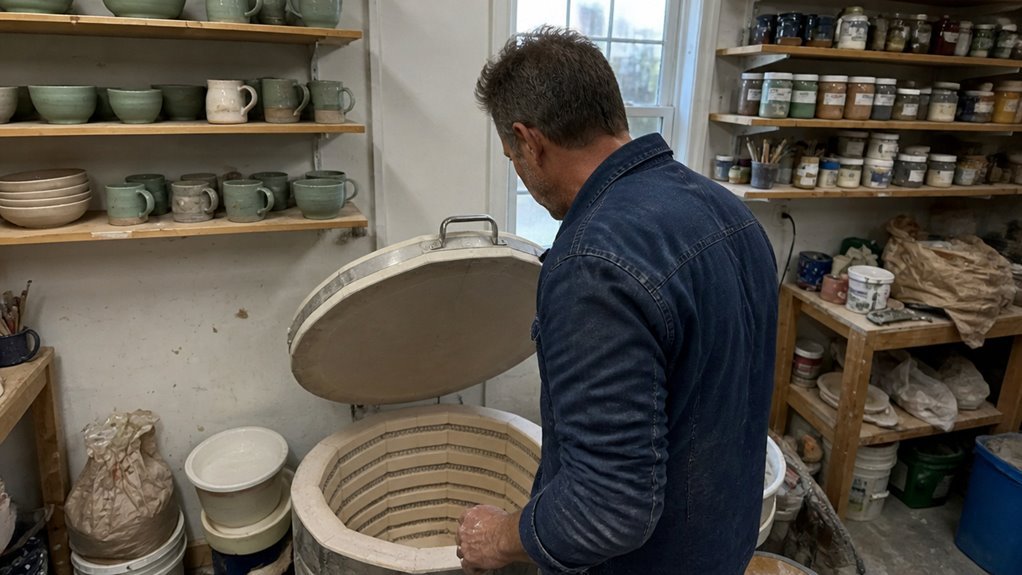
Choosing a beginner kiln comes down to practical details: power, heating elements, and temperature control. These matter more than extra features.
You also need to think about safety alarms, kiln capacity, and insulation. Insulation keeps heat from escaping, so you do not waste electricity.
Get these five factors right, and you will avoid buying a kiln that is too small for a full batch. You will also avoid one that fires unevenly.
Capacity matters because it determines how many mugs you can fit in a single firing. Match the size to your typical workload.
Heating elements wear out over time, so check how easy they are to replace. Reliable temperature control keeps your bisque and glaze firings consistent.
Safety alarms are not optional. They warn you about overheating or electrical issues, so read the manufacturer’s instructions before you wire anything.
For any electrical work, follow the kiln manual or hire a qualified electrician. Do not guess on wiring.
Insulation quality affects both firing results and your electric bill. Good insulation keeps the heat where it belongs.
Finally, think about your clay and glazes. Follow the manufacturer’s instructions for firing ranges and safety, especially when handling silica dust or any glaze materials.
A practical, simple kiln that fits your space and budget will serve you better than a complicated one.
Power and Heating Elements
Most beginner kilns pull between 1500W and 2000W. Higher wattage means faster heat-up and better retention, but it also needs a sturdier circuit.
A 1500W element might take 30-plus minutes to hit 800°C. Beefier units cut that time, so match wattage to your home’s wiring.
Elements come in two types. Metallic wire (Kanthal) is cheap, reliable, and fine for standard hobby temperatures.
Silicon carbide handles hotter, punishing ranges. For ceramics, glass fusing, and low-temp metal melting, aim for a maximum around 1200°C (2200°F).
Thicker high-temp wire resists oxidation and lasts through repeated firings. Stick with Kanthal unless you’re chasing extreme temperatures.
Before changing anything, check the manufacturer’s instructions for your kiln’s electrical requirements. If you’re unsure about circuits, have a qualified electrician confirm the setup.
Temperature Control Precision
A PID digital controller is the single most important feature for predictable kiln firings. It auto-adjusts power to hold your set point, while a simple on/off switch lets the temperature swing wildly.
Check that the kiln covers at least 900°C to 1200°C, which handles ceramics and glass fusing. A real-time digital display helps you learn how your clay and glazes react at each stage.
For hobbyists, a ±5°C soak tolerance is plenty. Chasing tighter specs adds cost without improving your results.
Programmable ramps prevent thermal shock in delicate greenware or thick pieces. If you stick to basic projects, a fixed-rate model still works, though you will have less control over slow cooling.
You will likely spend more time wedging and throwing than fighting the controller. Prioritize a PID unit with a clear display, and you will get a proud mug instead of a melted puddle.
Safety Features and Alarms
Three key safety features separate a beginner-friendly kiln from a liability. Over-temperature alarms, both audible and visual, alert you the second firing goes wrong.
Automatic shutdown is non-negotiable. It halts operation instantly if temperatures exceed safe limits, saving your pieces from becoming modern art.
Power-outage memory means your firing program resumes where it left off after a blackout. Grounding protection prevents electrical shock, a must for your garage-turned-studio.
Choose a top-opening door. You will avoid leaning into rising heat, cutting burn risk when you peek inside.
These features are your kiln’s seatbelt. Do not skimp on them.
Your fingers and your pottery will thank you. For any wiring or electrical concerns, follow the manufacturer’s instructions or consult a qualified electrician.
Kiln Capacity and Size
Kiln capacity is about your workflow and patience, not just volume.
The internal chamber dimensions, such as 5.9 x 5.9 x 5.5 inches, cap your single-piece size and batch count. You will feel that pinch quickly.
A roomier 6 x 6 x 8-inch interior lets you batch-fire multiple molds at once, cutting total firing time. Compact kilns heat faster and use less energy.
Compact kilns limit project scale, forcing multiple sessions for larger pieces. Weight matters too: a 39-pound model is not casually moved, so plan its home-studio spot.
Smaller chambers often achieve more uniform temperatures, a sneaky benefit. Match capacity to your typical project.
You cannot fire a vase in a thimble. Trust me on this one, friend.
Insulation and Heat Retention
Good insulation keeps heat where it belongs, which saves you money. Think of a thermos for your pots.
Triple-layer insulation locks heat in and keeps the exterior cooler. This makes it ideal for indoor home studios.
I learned this the hard way. A high-density sealed interior minimizes heat loss and shortens firing cycles.
The refractory lining, which is the heat-resistant inner layer, survives repeated extreme cycles. This keeps your kiln reliable.
Look for three things: triple-layer walls, sealed interiors, and durable refractory lining. Efficient heat retention prevents temperature drift, cutting energy use and your monthly power bill.
That means lower bills, firing after firing.
Prioritize insulation. Your pots and your wallet will thank you.
Ventilation and Cooling Systems
Every kiln you buy vents fumes you shouldn’t breathe, so airflow comes first. You need a well-ventilated, fire-resistant spot, no exceptions.
Fumes from clay and glazes are serious. Look for ventilation slits or grille designs that let heat escape fast and protect the controller.
Triple-layer insulation keeps the outside cooler, so you won’t burn your arm on a 1500W model. Cooling cycles run shorter than you’d think, but residual heat can still fry electronics.
Get a kiln with automatic stop functions and timed cooling features. These prevent thermal shock to your pieces.
If the kiln’s brain overheats, your pots pay the price. Good venting means good results, and that’s the whole trade-off.
For wiring, ventilation, or any electrical work, follow the manufacturer’s instructions or hire a qualified electrician. Your kiln’s manual is the final word on safe setup.
Included Accessories and Tools
A beginner kiln’s included accessories can make or break your first firing session. You want heat-resistant gloves and melting-pot pliers or tongs right away, because reaching into a hot kiln without them is a mistake you will only make once.
Pre-cut kiln paper sheets in multiple sizes eliminate manual cutting and ensure proper fit for varied projects. A physical manual that details temperature limits and shutdown steps is your safety net, not just paperwork.
Spare heating elements and high-temperature wire replacements extend the kiln’s lifespan and cut downtime when parts wear out. A power-off memory feature restores your last settings after an outage, which simplifies the learning curve.
Prioritize kits that bundle these tools. They will save you money, frustration, and maybe a singed finger.
Warranty and Brand Support
Beginners rarely think about the warranty until a kiln fails, leaving them with a costly paperweight. Cover the two parts that actually fail: the heating elements and the electronic controller.
Look for at least a one-year warranty. Anything shorter suggests the manufacturer lacks confidence in their own wiring.
Check that replacement parts, like thermocouples and relays, are easy to find. See if they offer phone or email troubleshooting without a paid contract.
Keep your receipt, and note that skipping a dedicated circuit voids coverage. Reliable brands also push safety recalls and firmware updates, which extend the kiln’s life.
Verify support before you plug anything in. Otherwise, you are just buying a ceramic space heater.

Heat-resistant gloves protect hands when loading and unloading hot kilns.

Durable shelves maximize chamber space for firing multiple pieces at once.

Accurate temperature indicators ensure perfect glaze and bisque results.
Browse discountedKiln Accessorieson Amazon
Frequently Asked Questions
What Is the Difference Between a Kiln and a Furnace?
A kiln and a furnace differ mainly by their purpose and the materials they process, not just by heat. A kiln is built to fire ceramics, pottery, or glass, while a furnace melts metals, heats a home, or forges materials in industrial work.
For your pet, neither device is a direct toilet tool, but they are useful to compare when cleaning or sanitizing litter trays. For example, you can heat a ceramic litter box in a kiln at a low temperature to kill bacteria, but never in a home furnace, since that risks toxic fumes or fire.
If you need to sterilize metal scoops, use a dedicated oven or furnace set below 400°F, and always check the manufacturer’s rating first. For any health concern related to heat exposure, check with a vet before trying a DIY method.
Can I Use a Kiln Outdoors in Humid Weather?
Yes, you can use a kiln outdoors in humid weather, but you must take extra precautions to protect it and your firing results. Humidity slows the drying of your pieces and can increase the risk of electrical shorts, so a dry, sheltered spot is essential.
Set up your kiln under a sturdy roof or awning that blocks rain and direct dampness, and never fire it during heavy dew or fog. Keep the kiln covered with a waterproof tarp when not in use, but ensure the vents and control box stay dry and unobstructed.
One concrete tip for today: place a simple hygrometer near your kiln and wait for humidity to drop below 70% before starting a firing. If you fire wet ware, the moisture can cause steam bursts, so always pre-dry your pots in a warm, dry area first.
For extra safety, use a dedicated outdoor outlet with a ground fault circuit interrupter, and check the wiring regularly for moisture. In my experience, a dehumidifier or fan near the kiln helps manage local dampness, but never let it blow directly on the hot surface. If your kiln is unglazed or the elements look rusty, postpone firing until conditions improve. For any electrical concerns, consult a professional, and for health issues with your pet, check with a vet if nearby fumes ever seem problematic.
How Do I Safely Dispose of Broken Kiln Shelves?
To safely dispose of broken kiln shelves, wrap the pieces in thick paper and tape them shut before placing them in a sturdy trash bag. Do not recycle them, since they are ceramic and will contaminate the recycling stream.
Check your local regulations, because some areas accept kiln shelves as construction debris while most curbside programs will not collect them. Call your waste management office for a direct answer, and ask about drop-off sites if curbside pickup is unavailable.
A concrete tip is to double-bag the wrapped shards and label the bag as “broken ceramic” to protect sanitation workers. For heavy fragments, use a rigid cardboard box instead of a bag to prevent tears.
If you are unsure about brick or refractory disposal options, search for “ceramic waste disposal near me” to find a facility that takes them. When in doubt, contact your local transfer station for guidance.
What Is the Average Lifespan of a Beginner Kiln?
The average lifespan of a beginner kiln is typically 10 to 15 years with proper care and regular maintenance. Treat it like a loyal workhorse, and it will fire countless projects without complaint.
Skipping cleanups or ignoring worn elements can shorten its life very dramatically, so keep the interior swept and check the wiring yearly. One concrete tip: always use a dedicated circuit to prevent electrical strain, which silently reduces kiln longevity. For cost-effective upkeep, inspecting the thermocouple and bricks every few months is a smart habit. If you notice cracks or erratic firing, consult a technician. For health or safety worries involving fumes, check with a vet if your pet is nearby, though a kiln room should stay off-limits to animals anyway.
How Do I Prevent Clay Explosions During Firing?
You prevent clay explosions during firing by ensuring your pieces are completely dry before they enter the kiln, ideally for several days. Ramp the kiln slowly through 212°F so trapped dampness can escape without turning to sudden steam.
Check wall thickness on hollow forms, since uneven drying often causes popping. Never skip a bisque firing, as it burns out organics and stabilizes the clay structure safely.
Seal any hollow forms with a small vent hole, or leave openings unsealed. Completely dry, slow ramp, and vented hollow forms are your three safeguards. If you suspect moisture inside a piece, extend the preheating phase to 200°F for an extra hour. For detailed schedules, search “kiln drying cycles” alongside your clay body’s specifications. This step prevents ruined work and kiln damage.
Rounding Up
Picking your first electric kiln comes down to matching the budget to the control you need, and PYY with a PID is the answer.
Write down your firing needs and check the 2000W model for small batches. Test the digital control to avoid botched bisque firings before you commit.
Compare that price against the Paragon SC2 at $1,200 as the upgrade path when you outgrow the starter unit. Measure your space and firing frequency today to confirm the smaller wattage works.
Fire often and start small to build your rhythm. Just buy PYY and skip buyer’s remorse.